ecosophia: (Default)
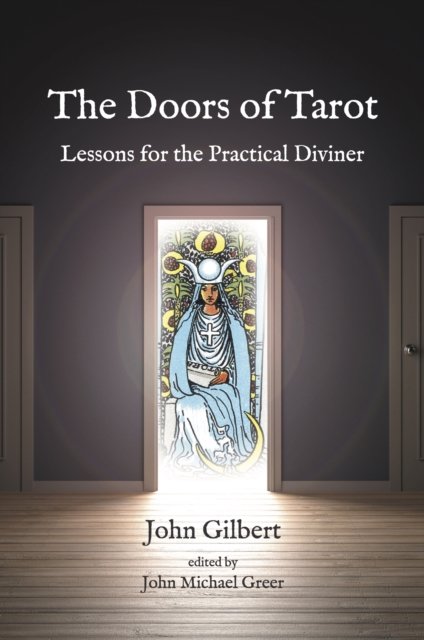
Doors of TarotMy British publisher Aeon Books contacted me to let me know that one of the books of John Gilbert's writings I edited, The Doors of Tarot, has been shortlisted for one of the International Cartomancy Awards sponsored by TABI, the Tarot Association of the British Isles. These awards have a two-stage process -- committees pick the ten best products in each category, and then there's a public vote for the winner. Voting is now open to the public...

https://tabi.org.uk/carta-awards_/

...and will be open until June 30. If you enjoyed this book, the publisher and I would both count it as a personal favor if you could take a few minutes to vote for it. Thank you!


ecosophia: (Default)
ParallaxAnother podcast appearance of mine, this one on Parallax Academy with hosts Andrew Sweeny and Owen Cox.  The subject was Tarot and divination generally, but regular readers (and listeners) of mine will know already that it veered off in any number of unexpected directions. Interested?  Check it out here.


ecosophia: (Default)
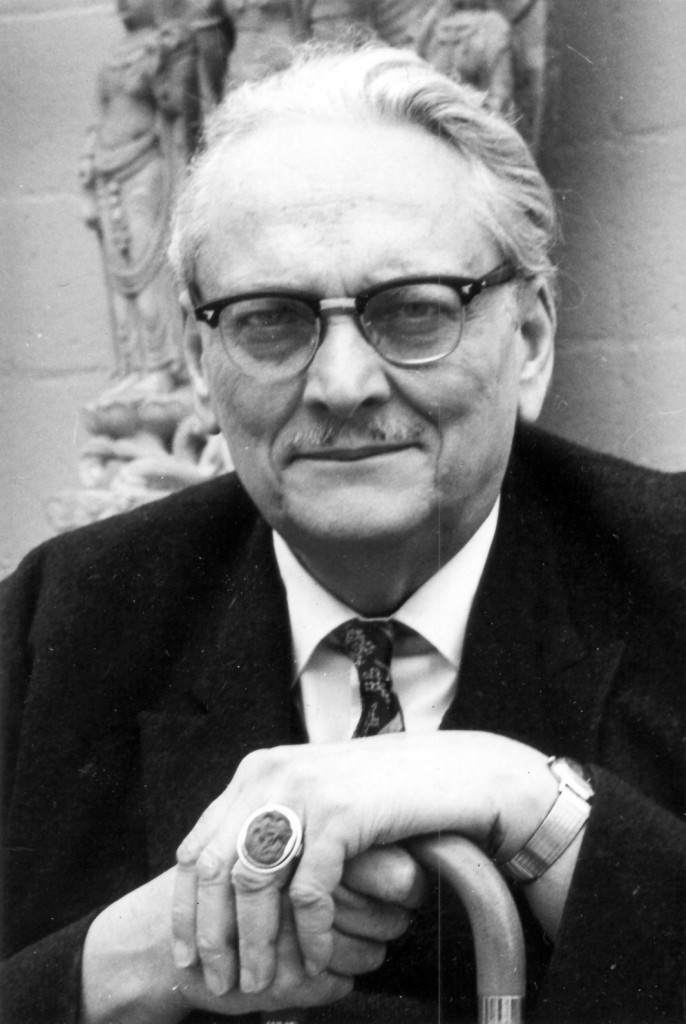
Doors of TarotI'm delighted to announce that two books by my late teacher John Gilbert, The Doors of Tarot and The Tree of Spirit, are in press and available for preorder. John himself was never willing to see his writings go through the publishing process, but with the help and encouragement of his widow, I assembled and edited these two volumes from his writings for a couple of defunct websites.

Here's the blurb for The Doors of Tarot:

"An accessible and practical introduction to Tarot divination.

"John Gilbert was an extraordinary tarot diviner and teacher, and this book draws on his knowledge and expertise to provide a clear and comprehensive outline of how to accurately and easily understand and read the cards.

"Beginning with an introduction on how tarot cards work, their symbology and divinatory meanings, this is the perfect starting point for anyone looking to understand these fascinating cards and glean a deeper understanding of the world.

"Gilbert also provides a selection of different tarot spreads, a discussion of tarot and astrology, as well as key tips on developing your intuition."

I would add to this that John specialized in a skill you'll rarely encounter in today's tarot circles: he was an expert at doing one-card readings. A client would ask him a question, he'd draw one card, and give them a clear, concise, and accurate answer. I've never known anyone who did that as well as he did, but some of his students came close, and he spends much of this book explaining just how to do it.

Interested?  You can preorder here in the United States and here anywhere else in the world.

Tree of SpiritHere's the blurb for The Tree of Spirit:

"A fascinating exploration of the symbolic foundations of the Western magical tradition.

"Using the Cabalistic Tree of Life and the tarot deck, this book takes the foundations of Western esoteric tradition as a basis and goes onward into the deep places of magical spirituality.

"Written by the influential American tarot teacher and occultist John Gilbert, it is enriched by insights drawn from modern Gnosticism, spiritual alchemy, neopagan nature worship, and ceremonial magic.

"This book offers a wise and practical path to awakening for the modern student of the mysteries."

Here I'll add that this gives a great deal of additional information on the version of the Tree of Life John used, which is also the version central to the initiations and practices of the Fellowship of the Hermetic Rose, which I posted here last year and which seems to be finding a good-sized audience among students of the Western mystery tradition. Both these books make good supplementary reading for the FHR coursework, as well as being good solid guides to their respective corners of occult tradition.

Interested?  You can preorder here in the United States and here anywhere else in the world.
ecosophia: (Default)

FHR logoYes, I know eastern Europe is in the middle of a war right now, politicians are flailing, the price of oil is spiking, and stock markets are doing power dives. That's all the more reason to get serious about spiritual development, since it's our inner resources that matter most in tough times. With that in mind, here's the next installment of the FHR material. 

*   *   *   *   *

As mentioned in the prospectus posted last week, the basic practices of the FHR are a protective ritual, discursive meditation, and some form of divination. These are to be done every day. The half an hour or so it will take you to perform these practices are the single most important investment you can make in your own spiritual development and occult training. They form the threefold foundation for attainment on the occult path.

The protective ritual may be the Sphere of Protection, the Lesser Ritual of the Pentagram and Middle Pillar exercise, or the Judson exercise. (Links to all these are included in last week’s paper.) If you haven’t yet made one of these part of your daily routine, it’s fine to experiment with all three in order to decide which one suits you best, before you proceed to the initiation of the grade of Seeker. Whichever one you decide to use should be committed to memory, so you can begin to concentrate on making it effective.

Discursive meditation follows the method set out in the series of posts linked in last week’s paper. You may draw themes for meditation from any book on occultism that interests you—for example, if you are following along with the book club posts on Eliphas Lévi’s The Doctrine and Ritual of High Magic, you can certainly use that as a source of themes for your meditations in the FHR. (If you can’t get a month’s worth of themes for meditation from each one of Lévi’s chapters, you aren’t even trying.) Other sources of themes for meditation that are very well suited  to the work of the FHR are Dion Fortune’s books of essays, such as Applied Magic and Sane Occultism, and the writings of Manly P. Hall—his monthly letters, which you can find here, are especially rich in themes. You needn’t limit yourself to these, however. You get to choose the themes of your meditations, now and in the future.

Divination may use any method you choose. In order to complete the training program of the FHR you will have to master at least three methods of divination, of which no more than two can be divination decks (and those have to be different types of deck—for example, you can’t just do two different tarot decks). There are hundreds of divination decks currently in use, ranging from classic decks such as tarot and the ordinary playing card deck through less common decks such as the Lenormand deck and the Kipper deck to newly minted and rather exotic decks such as my Sacred Geometry Oracle. You may use any of them you like.

Outside the realm of divination decks, however, the range of divination methods available is nearly as great, and you  may use any of them—in fact, you may do three methods that don’t used decks. (You just can’t use more than two decks, if you use decks at all.) Numerology, which was covered in a set of earlier papers here, is certainly an option. So are astrology, geomancy, palmistry, metoscopy (face reading), runes, Ogham, the Coelbren, domino divination, dice divination, tea leaf reading, dowsing, radionics, dream interpretation, and the list goes on. If you already know one or more forms of divination, you can include those, but consider learning at least one form of divination that is completely new to you as part of your FHR work.

These three practices are the first steps to take as you prepare for your initiation. While you work on them, you will also need to learn how to open and close a temple of the FHR. The ceremony for doing that is given below.

Temple Opening and Closing

This basic ceremony is used to begin and end the self-initiation, equinox, and solstice rituals of the FHR, and can be used for other purposes as needed. Like all ceremonial workings, it should be practiced regularly until it can be done from memory. (Many people find that once a week is a good rhythm for practicing this ceremony.)  You will need to be able to perform this ceremony smoothly and effectively before you can perform the Seeker initiation, the first of the FHR initiation ceremonies, so getting started on it now will be helpful.

The physical requirements of the temple are simple. You will need a room or other space where you can be assured of reasonable privacy while you work.  (It can be used for other purposes when you aren’t practicing ritual there.)  You will need an altar with an altar cloth; as mentioned in an earlier paper, this can be any small table or folding tray. You will need your symbols of the four elements—a folding fan, incense, a cup, and a bowl of salt—and you will need the black and white pillars to set on the altar. You will also need a chair. (When you perform the Seeker initiation, you will also need the four candles, but until then, leave them out.)

Set the altar in the center of the space with the chair in the west, facing it. The four elemental symbols are on the altar, the fan to the east, the incense to the south, the cup to the west, and the stone to the north. The pillars are in some convenient place close to the altar. When they go on the altar, the white pillar will go on the southeast corner and the black pillar on the northeast corner, but they are not placed on the altar until the lodge is opened and they are taken off again when the lodge is closed.

Opening Ceremony

Before you begin, sit in the chair facing the altar, and take a few moments to clear and center your mind. Then rise and go to the altar, standing on the west side, facing east. Say:

“I prepare to open this temple of the Fellowship of the Hermetic Rose on the Candidate Grade.” (You will replace the word “Candidate” with the title of another grade when you have achieved it.)  “I invoke the presence and protection of my guardian angel/genius.”

The phrase “guardian angel” is used by believers in monotheist faiths, while “guardian genius” is a term for the same concept in classical Paganism. You may use either phrase as you wish. Imagine the guardian angel/genius as a tall, winged, luminous figure in the east, facing you. Be aware of its protective influence.

Once you have done this, place the black and white pillars on the altar, the black pillar on the northeast corner and the white pillar on the southeast corner. (This is when you will light the candles, once you are ready to enter the grade of Seeker.) Then say one of the following, depending on which of the three protective workings you are using.

If you use the Sphere of Protection, say: “Let this temple be set apart by a Sphere of Protection.”

If you use the Lesser Banishing Ritual of the Pentagram, say:  “Let this temple be set apart by the sign of the Pentagram.”

If you use the Judson exercise, say:  “Let this temple be set apart by the Magnetic Forces.”

Perform the Sphere of Protection, the Lesser Banishing Ritual of the Pentagram, or the Judson etheric cleansing to banish all unwanted energies from the space. Then say:

“I now clear and cleanse this temple according to the ancient ways.”

Take the folding fan to the east, raise it up in front of you, and open it. Imagine the wind blowing toward you from the east, and imagine it swirling around the fan.  Now walk clockwise around the temple with the fan, and say the following words as you do so: 

“I purify this temple and all within it with the element of Air, and I invoke the spirits and powers of Air. May they bless this temple and further its work.”

When you have returned to the east, put the fan back on the altar, and go around to the south. Pick up the incense and face south. Imagine heat streaming toward you from the south, and imagine it gathering around the incense. Now walk clockwise around the temple with the incense, and say the following words as you do so: 

“I purify this temple and all within it with the element of Fire, and I invoke the spirits and powers of Fire. May they bless this temple and further its work.”

When you have returned to the south, put the incense back on the altar, and go around to the west. Pick up the cup and face west. Imagine cold spray drifting toward you from the west, as though you stood near a waterfall, and imagine the spray gathering around the cup. Now walk clockwise around the temple with the cup, and say the following words as you do so: 

“I purify this temple and all within it with the element of Water, and I invoke the spirits and powers of Water. May they bless this temple and further its work.”

When you have returned to the west, put the cup back on the altar, and go around to the north. Pick up the stone and face north. Imagine the rich dark scent of freshly turned soil coming toward you from the north, and imagine it gathering around the stone. Now walk clockwise around the temple with the stone, and say the following words as you do so: 

“I purify this temple and all within it with the element of Earth, and I invoke the spirits and powers of Earth. May they bless this temple and further its work.”

When you have returned to the north, put the stone back on the altar, and circle around past the east and south to the west of the altar.  Face east and say:

“I invoke the Divine Presence. May (use the name of a deity, or simply say “God” or “the gods and goddesses”) be with me and grant his/her/their presence and protection while this temple is open.”

You may say a prayer at this point, either aloud or silently, or simply attend to the divine presence. When you are ready to go on, say: 

“I now declare this temple of the Fellowship of the Hermetic Rose open on the Candidate Grade.  The Sun has arisen, and the shadows flee away.”

At this point, proceed with the working you have planned, or simply sit in the chair and meditate. When you are finished, proceed to the closing ceremony.  

Closing Ceremony

Before you start the closing, sit in the chair facing the altar, and take a few moments to clear and center your mind. Then rise and go to the altar, standing on the west side, facing east. Say:

“I prepare to close this temple and return to my duties in the outer  world. I now clear and cleanse the temple according to the ancient ways.”

Now clear and cleanse the temple with the symbols of the four elements, using exactly the same actions and words you used in the opening.  When you have finished, return to the west of the altar, facing east, and say:

“I thank (name of deity, or simply “God” or “the gods and goddesses”) for his/her/their presence and protection while this temple was open.”

You may say a prayer at this point, either aloud or silently, or simply attend to the divine presence. When you are ready to go on, say one of the following, depending on which working you did to prepare the space.

If you used the Sphere of Protection, say:  “I now release the Sphere of Protection I placed about this temple, and send its influence to benefit those who need protection at this time.”

If you used the Lesser Banishing Ritual of the Pentagram, say: “I now release the banishing I placed about this temple, and send its influence to benefit those who need protection at this time.”

If you used the Judson exercise, say: “I now release the Magnetic Forces I placed about this temple, and send their influence to benefit those who need protection at this time.”

Imagine the protective energies dissolving and going elsewhere to protect others. Then remove the white and black pillars from the altar and set them somewhere else. (When you are using altar candles, this is when you will extinguish them.) When this is done, say:

“I now declare this temple of the Fellowship of the Hermetic Rose closed on the Candidate Grade.” This concludes the ceremony.
ecosophia: (Default)

FHR logoLast week, at the conclusion of a five-part sequence of posts here on Pythagorean numerology, I mentioned that those posts were among other things knowledge lectures for the relaunch of the eccentric Golden Dawn offshoot I more or less inherited from my late teacher John Gilbert. That attracted a great deal of enthusiasm, so I plan on proceeding a little more directly than I’d originally anticipated.

What I have in mind for this project differs in some details from his order, the Magickal Order of the Golden Dawn (MOGD), just as that differed from Juliet Ashley’s Holy Order of the Golden Dawn, that from Waite’s Holy Order of the GD, that from the Hermetic Order of the GD, and that from whatever source inspired Westcott and Mathers to get the whole ball rolling in the first place. To mark the distinction and avoid confusion, I’ve given this new venture a different name, the Fellowship of the Hermetic Rose—FHR for short.

I have a great deal of material from the MOGD to edit, format, and post—four or five times as much, for example, as I had from the Order of Spiritual Alchemy. John’s system included its own idiosyncratic take on the Tree of Life, its own distinctive symbolism for the grades of initiation, its own grade rituals, and a great deal of other material on a galaxy of occult topics. I plan on working that up as time permits, and I’m going to do my best to post something here every week, but it’s still going to take quite a while.

The FHR has eight grades of initiation, as follows:

0° Candidate

1° Seeker

2° Sojourner

3° Server

4° Student

5° Teacher

6° Initiate

7° Adept

Of these, the 0° is a preliminary degree for those who are exploring the work of the Fellowship but have not yet made a commitment to that work.  The 7° is an inner degree which is to be attained by the individual through his or her own efforts, and remains a wholly private matter when and if it is attained. (Anyone who proclaims himself or herself an Adept of the FHR thus proves by that act that he or she isn’t one, and also the he or she doesn’t know the first thing about the Fellowship’s teachings and traditions.) The grades between these two endpoints correspond very roughly to the historic Golden Dawn grades, as follows:  Seeker to Neophyte, Sojourner to Zelator, Server to Theoricus, Student to Practicus, Teacher to Philosophus, and Initiate to Portal.

All the work of these grades, and the grade initiations themselves, are designed to be performed by the individual member through his or her own efforts.  A member who reaches the grade of Teacher is qualified to found a temple, if three other members join in, but this is optional at best and irrelevant at worst. Individual work is the heart of the system. The primary goal of that work is the attainment of wisdom through the practice of ritual, meditation, and divination, and the study of traditional occult teachings. The secondary goals of the work are the development of a good general grounding in occultism that can then be applied to many other practices, on the one hand, and on the other, reaching a professional level of skill in at least one form of divination. (John was a brilliant tarot reader, but he encouraged students to master whatever mode of divination they preferred, as well as getting a general grasp of a few standard methods.)

There is no hierarchy in the FHR beyond the necessary structure of degrees. Any person who successfully completes the work as far as the Teacher grade can open a temple and serve as its head. Any person who successfully completes the work as far as the Initiate grade is in possession of the full tradition and may do with it as his or her personal spiritual vision directs. This includes the right to go off and set up a separate working using whatever variations on the material he or she chooses to use, just the way I’ve done here. (Occult traditions routinely pup offshoots this way—it seems reasonable to acknowledge that, and not try to fulminate uselessly against it.)

The foundations of training in the system will be familiar to my regular readers. (Where do you think I got this approach?)  The daily practices are a daily discursive meditation, a daily divination, and a protective ritual—John Gilbert strongly recommended the Sphere of Protection but he also allowed members to practice the Lesser Banishing Ritual of the Pentagram and Middle Pillar exercise instead if they found those more suitable; the FHR will continue that tradition, and add the Judson exercise as a third option. If you haven’t settled on one of these, try all three while you’re in the Candidate degree and see which works for you. If you already follow a system of training that includes these three elements as daily practices, why, you’re good, and you can do the rest of the FHR work as a supplement to that system.

In addition to the daily practices, weekly practice of a home temple ritual, a sequence of elemental scryings, invocations of your Guardian Angel or Guardian Genius, and a whale of a lot of divination will be part of the training ahead. All told, you can expect to put 30 minutes or so every day into the basic daily practices, and one to three hours a week into other work, plus time spent reading and studying.

this oneProspective members will doubtless want to know what membership costs and what they will need to provide in terms of material requirements. Membership is free. In terms of equipment, you will need a small table or folding tray to serve as a temporary altar for some practices, and an altar cloth to put over it would be nice. You will need a chair that you can set up facing the altar.  You will need four candles—one each colored red, yellow, blue, and green—and appropriate holders for them. You will need one standard Rider-Waite tarot deck, the one shown on the right—yes, it has to be that specific deck. If you prefer to use a different tarot deck for divination, that’s fine, but you need the Rider-Waite for ritual purposes.
You will also need a pair of small pillars, 6” to 18” tall, which you can put on the sides of your altar; one is black, one white. If you have woodworking skills, making them from wood is the best option, but you can use anything else that works—if you can’t afford much, get two cardboard cylinders from the centers of paper towel rolls, cover one with white paper and the other with black paper, and tape or glue one end of each to a small square of heavy cardboard so they stand up. (Drop something small and heavy into the bottom of each to help with this.)

You will also need symbolic representations of the four elements. To begin with, these are very simple—an incense burner and your choice of incense for fire, a folding fan for air, a cup or bowl of water for water, and a small bowl of salt for earth. Over the course of your training you will replace these with a wand, a book, a cup, and a pentacle; instructions for making or buying these will be included. (Yes, a book for air, not a dagger. That’s one of the distinctive features of this system. There are complicated reasons for it; one of them is the very old rule against bringing anything of a metallic nature into a temple of the mysteries, which some of my readers will have encountered in a different context.)

Some books will also be recommended. All of them are available for free download.

So that’s what you have to look forward to, dear reader, if you decide to climb aboard this very odd train and ride it into the distance. If, having read the above, you’ve decided you want to give it a try, and are willing to start experimenting with the basic practices of the Fellowship, why, by the power in me invested as an Initiate of the Fellowship of the Hermetic Rose, I proclaim you received and welcomed in due form as a member of the Candidate grade.

ecosophia: (Default)
Manly P. HallToday's mail brought a small but welcome package from Los Angeles, courtesy of the Philosophical Research Society, the educational nonprofit founded most of a century ago by the redoubtable Manly P. Hall. In the package were two copies of the recent reprint of the Tarot deck that Hall designed and his friend and favorite artist Augustus Knapp painted, and three pamphlets adapted from Hall's godzillions of lectures. 

I never met Hall, which is a pity; our lives overlapped by some decades -- he died in 1990 -- and even in advanced old age, by all accounts, he was a brilliant speaker and a gifted teacher of occultism. It's a topic for a good brisk debate as to whether Hall or the equally redoubtable William Walker Atkinson (aka Yogi Ramacharaka, Theron Q. Dumont, and all three of the Three Initiates who wrote The Kybalion, for starters) was the most influential American occultist of the twentieth century, but The Manly One is certainly a robust contender. He combined an encyclopedic knowledge of Western occult tradition with something a lot of people talked about in his day but almost nobody actually had -- initiation into an Asian esoteric tradition. In his case it was Shingon Buddhism, one of the two Japanese esoteric sects -- think of Tibetan Buddhism with a Japanese accent and you won't be too far off. He knew a lot about Shingon, including the kinds of things that were very hard to learn at all back in the day if you were a white American guy; his writings on the two primary Shingon mandalas, the Kongokai (Diamond/Thunderbolt Assembly) and Taizokai (Womb Assembly), were as far as I know the most complete discussions of these in English until fairly recently. 

His most famous book, The Secret Teachings of All Ages, was a young man's book, brash and enthusiastic. The books of his I value the most come from later in his career: Self-Unfoldment Through Disciplines of Realization and Meditation Symbols in Eastern and Western Mysticism are among these. It was in these two books, more than anywhere else, that I caught the trail of bread crumbs he left. 

It used to be very common for occult teachers to hide their practical teachings in various ways, so that you could find them in their books if you worked at it but would skate right past them if you didn't. W.E. Butler, another occultist I studied eagerly in my youth, did this all the time -- for something like twenty years I read Butler's book The Magician: His Training and Work once every year or so, and every time kicked myself for having missed yet another round of obvious hints the time before! Most of what Butler had to teach has seen print, though, and that's not true of Hall. 

Hall had a method of meditation that, to my knowledge, he never put into print in any one place. Some of his mature books hint broadly at it, then veer away. That was why I ordered my copy of the tarot deck Hall designed. (Sara wanted hers because she trained as an art historian and has put many years into studying symbolic images.) The pamphlets were mostly for fun -- I enjoy Hall's writing, and even his lightweight stuff often has things well worth learning in them -- but the deck was serious. I have a copy of the older edition of the deck, and its LWB ("Little White Book") had a couple of crucial clues in it; the new edition is larger, better suited to meditative use...and the LWB has several more clues not found in the older version. 

Another nod and wink from Manly P. Hall duly picked up. The pieces come together...
ecosophia: (Default)
The KermitMy wife Sara was looking up Tarot decks online earlier this evening, with  an eye toward helping a correspondent choose a suitable deck, and suddenly started laughing in that curious way that signals a certain amount of, well, existential dread. Or something. 

She had just encountered, for the first time, the Kilted Rubber Chicken Tarot. Yes, you read that correctly, and it's exactly what it sounds like: a tarot deck in which each card includes a rubber chicken wearing a Scottish kilt. 

I consider this an omen, and not especially a favorable one, but to explain it a few words about the history of the tarot in America might be in order. 

Back in the dawn of time, when dinosaurs stalked the earth -- we're talking the mid-1970s here -- you had your choice, if you were lucky, among four different tarot decks in the United States. You could get a badly colored knockoff of the Waite-Smith (aka Rider-Waite) deck; you could get the IJJ Swiss tarot; you could get the Marseilles tarot; and you could get a thing called the Tarot of the Witches, which was cooked up for a James Bond flick and got into circulation thereafter. That was it. It wasn't because there was some kind of embargo on tarot cards; it was because the demand was so low that this was all there was a market for. 

I recall with some fondness when a good clear reproduction of the Waite-Smith deck got into print -- I snapped one up -- and even more fondly the appearance of David Palladini's Aquarian tarot, which I used for many years. Then the floodgates opened, and tarot decks began piling up at an astonishing pace. There are now tens of thousands of decks in circulation, and one of them has rubber chickens in Scottish kilts. 

I have nothing against rubber chickens in kilts, but I suspect the great tarot boom that kicked off in my teen years may finally have jumped the shark. If you have favorite tarot decks that are on the exotic side -- say, anything other than the Waite-Smith or a few dozen others of the more popular decks -- you might want to pick up a second copy and stash it somewhere, as the decade or so to come may see a lot of decks drop permanently out of print. 
ecosophia: (Default)
Tarot reading One of my commenters on the blog asked me a little while back for advice on learning how to read Tarot cards. It's a question I field fairly often, and it has a fairly straightforward answer. 

There are tens of thousands of books out there on the Tarot, and at least as many on other systems of what is technically known as sortilege -- the kind of divination that involves pulling one or more symbols out of a preexisting set (say, a Tarot deck, or a set of runes, or a set of Coelbren letters, or what have you). Sortilege isn't the only kind of divination out there, but it's far and away the most popular, and it's also easier to learn than most of the others. 

There are also many different ways to learn to read Tarot, or any other method of sortilege. The following is the way I do it. I've learned something like twenty different sortilege systems over the years, starting with Tarot and going on into some fairly odd corners of occult tradition. I don't recommend books for beginners, though those can be useful later on. Here's what you do:

1. Pick a Tarot deck (or what have you) that appeals to you. You'll get better results with a deck if you like the art and find the symbolism interesting to look at. 

2. Go through it slowly, card by card, looking at every image. Then read the LWB ("little white booklet") that comes with it. 

3. Every day thereafter, take one of the cards -- do them in order so you get every card -- and just look at it for some minutes. Notice how the imagery makes you feel, what it reminds you of, what thoughts it wakens in you. Then read the section of the LWB on that card, and think about how the meanings listed there (both upright and reversed) relate to the imagery. Then look at the card for another minute or so before putting it away. This is Part One of your daily divination practice. 

4. Part Two is to cast a simple reading every day. The one I recommend is three cards laid side by side. The first represents you; the second represents the situation; the third represents the outcome. Shuffle the cards, ask them "What do I need to understand about today's events?" and then shuffle them again, cut, and deal out three cards. Again, look at the cards, and see what reactions they awaken in you; then look up their meanings and think about those; then try to tell a very simple story in which the cards provide the plot and your life provides the characters and the setting. 

Write down your interpretation. Of course it's going to be wrong at first; don't worry about that. Just write it down, then shuffle the cards, put them away, and go do something else. 

5. The next day, go back to your reading, compare it to the events of the day, and see if you can figure out what the cards were trying to tell you. This is Part Three of your daily divination practice. You probably won't figure it out at first, but give it time, and remember that the LWB is not a set of stone tablets handed down from On High. If you review your readings every day once the facts are in, you'll begin to figure out what the cards mean to you, which is after all what matters, and then you'll begin to interpret them better the first time. 

That's it. It's probably going to take you several months to get to the point that you understand what the cards are trying to say to you, but it's going to take you that long no matter what you do, so you might as well buckle down and do it. 

Two additional comments that I've found it necessary to make over and over again to students: 

First, as noted above, the LWB is not a set of stone tablets handed down from On High. It's just one person's attempt to summarize what the cards tend to say to that one person. The single most common cause of failure in learning to divine, in my repeated experience, can be summed up in the words "But that's not what the LWB says!" The LWB is a springboard; if you cling to the springboard while trying to dive off it, you're going to end up going nowhere. The important thing is to try to figure out what the cards mean to you, and that need not have much at all in common with what they mean to someone else. When you cast a reading, let your intuition take over; when you try to figure out what the reading meant the next day, approach each card with the thought that it must refer to something you experienced, and pay attention to any connection that comes to mind, no matter how far-fetched. It may not turn out to be far-fetched at all. 

Second, nothing in any reading is as dire as you think it is. Again, nothing in any reading is as dire as you think it is. And one more time, NOTHING IN ANY READING IS AS DIRE AS YOU THINK IT IS.  Seriously. Every beginning Tarot reader I've ever met, myself included, started out reading each card in its most over-the-top sense, and learned through experience (and more than occasional embarrassment) to tone things down to the point that they make sense. OMG, here's the card named Death! (It means that something's going to change in a way that doesn't permit going back to the previous state.) OMG, here's the Ten of Swords! (It means that something is over and done with.) OMG, here's -- well, you get the picture. Over-the-top Tarot reading is a reliable source of drama for those who enjoy being emotionally overwrought, but I can't think of any other use for it, and it reliably yields inaccurate readings. 

So there you have it. The daily practice of divination is one of the three foundations of occult training as I understand it and teach it -- the other two being the daily practice of a basic banishing ritual, and the daily practice of discursive meditation. Five minutes of ritual, fifteen minutes of meditation, and ten minutes casting and interpreting a reading -- that's just half an hour a day, and it will open portal after portal for you. 

Profile

ecosophia: (Default)John Michael Greer

May 2026

S M T W T F S
     1 2
34 567 8 9
1011 1213141516
1718 1920212223
24252627282930
31      

Syndicate

RSS Atom

Style Credit

Expand Cut Tags

No cut tags
Page generated May. 21st, 2026 10:40 am
Powered by Dreamwidth Studios